Facebook LinkedIn Twitter

Opening Doors to Research: Reflections on the LMS Pathways Programme

In partnership with our neighbours at Ark Burlington Danes Academy and the charity Youth Careers Collective, we delivered LMS Pathways – a programme designed to help local students explore careers in science. Through workshops, lab visits and mentoring, the programme connected students with scientists, built confidence and opened up opportunities including research work experience.

Institute news

LMS Pathways was designed to promote science capital by connecting students with real scientists and showing them that science is all around them, from everyday life to world-leading research. Science capital is the science-related knowledge, interests and connections a young person has, and it matters because the more of it they have, the more likely they are to see science as “for them” and to continue with it beyond GCSEs. In September, we celebrated the end of the programme, with five students completing mentoring sessions with an LMS employee. The feedback from mentors has been glowing, and for the students, the experience has been eye-opening, broadening their sense of what a career in science can look like. 

 Where they started 

Our cohort was a class of Year 12s studying A-Level chemistry at Ark Burlington Danes Academy, where 60.1% of students are eligible for free school meals. They were a group of ambitious, curious students who already loved science, many of whom were certain they wanted a career in STEM. What they often lacked were the connections and exposure to see the full range of jobs open to them, along with the confidence and know-how to go after them. When YCC asked students what that career might look like, their answers were often medicine or dentistry. These are brilliant professions, but they are only a small part of the picture.  Young people can only aim for the jobs they know exist, and many of the most exciting roles in science are simply invisible to them. 

 How it worked 

The programme was built in three stages. It began with a two-hour ‘discovery’ workshop held in school, which introduced the students to the LMS and the range of careers in discovery science and medical research. Students created mock research proposals based on real projects happening at the LMS, giving them a first taste of the cutting-edge work taking place right next door.  
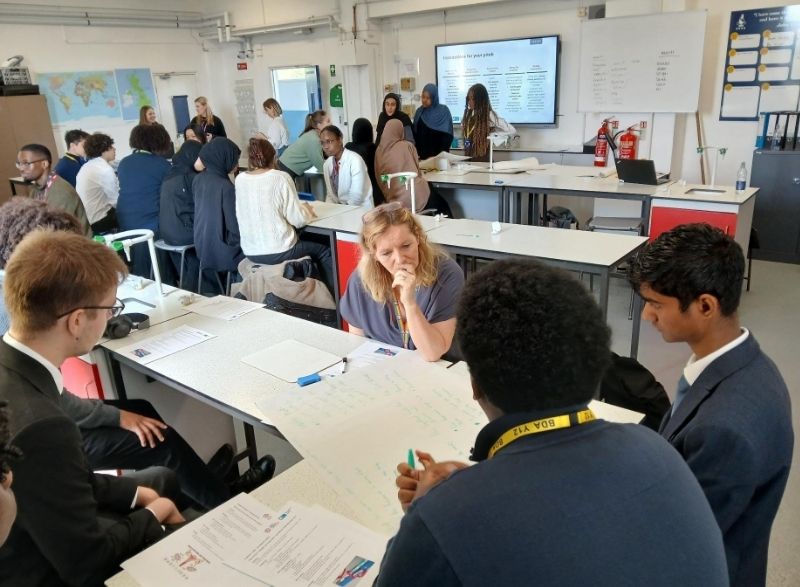
Students and LMS staff around a desk
Staff from the LMS facilitating a workshop at Arc Burlington Danes

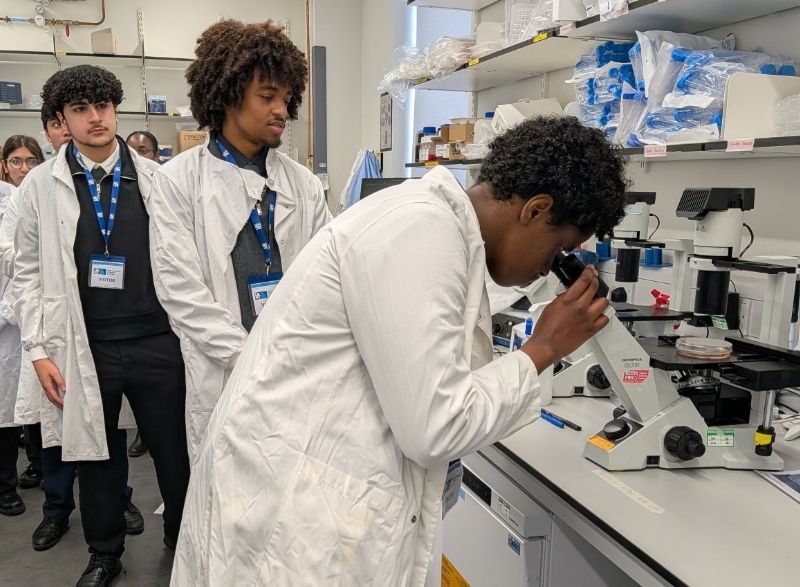
Next came an insight visit to the LMS, which proved a real highlight. Students were thrilled to see state-of-the-art equipment up close, including the institute’s impressive microscopy facilities and its fruit fly labs. Joshua Owolabi, our Health and Safety Advisor, who volunteered at the visit and later became a mentor, noticed the difference straight away: “You could see that spark, especially the curiosity. They could see up close that we’re regular people at the end of the day, not wizards.” Seeing a working lab first hand and meeting the people in it made a career in research feel real and within reach. As one student, Naomi Casimir, put it: “I could picture myself working there, and that’s when I knew this is what I wanted to do.”  

A group of students around a microscope
Students from Arc Burlington Danes on a tour of the LMS labs

Finally came the mentoring, and this is where the programme made its greatest impact. Five students from the class were given the opportunity to take part, each matched with a mentor from the LMS. Mentors came from a range of roles across the institute, from postdoctoral researchers to health and safety, showing students that it takes far more than scientists to make world-leading research happen. Over six one-to-one sessions, they got to know their mentor’s work and what life as a scientist is really like. Sessions covered everything from UCAS personal statements and CVs to interview technique, with mock interviews giving students the chance to practise. One student was even encouraged to email a lab leader directly to ask about work experience. As a result, students felt more confident and better prepared for their next steps. 

 The impact 

Across the programme, the biggest shift was in awareness. Students who arrived picturing only medicine or dentistry left with a far richer understanding of the roles available in science. Above all, they discovered how exciting and fulfilling a career in research can be, and that it is a path open to them. For that same student, the email paid off, leading to two weeks’ work experience in her mentor’s lab, a real step towards her new goal of becoming a research scientist. As her mentor, Georgia Price, a Postdoctoral Researcher in the Cellular Stress group explained: “So much of science is word of mouth and who you know. I think that’s one of the biggest barriers, particularly for students who just don’t have those connections.” 

 Supporting teachers 

Alongside the programme, YCC hosted a careers event at LMS for science and careers teachers, designed to help teachers across London bring research science into the classroom. Teachers went on a discovery tour of the labs behind a recent study on how ovarian cancer drugs spread through tumours, visiting each team in turn and piecing together the story of the research as they went. It was an immersive way to see real research up close and gave them fresh ideas for linking the curriculum to the latest scientific research. Giving teachers the tools and confidence to bring careers to life in their lessons means every science class can become a chance to spark a young person’s ambitions, reaching far more students than any single programme could.  

 Looking Ahead  

As a pilot, LMS Pathways has shown what is possible when young people are given direct access to working scientists. Showing students and teachers that science is part of everyday life, and that scientists are people you can meet and talk to, is at the heart of building science capital.  

It has been a real delight working with the YCC, Ark Burlington Danes Academy, our brilliant volunteers and the students themselves. We’re so proud of what these young people have achieved, and hugely grateful to the mentors who gave their time so generously. We’re excited to build on this success and open even more doors in the years ahead.