



Professor Wiebke Arlt, Director of the MRC Laboratory of Medical Sciences (LMS), is playing a key role in a major international programme funded by SPRIND to develop Impli’s continuous hormone monitoring technology for one of the most common metabolic and hormonal conditions affecting women. Researchers hope the approach could transform diagnosis, treatment monitoring and the development of new therapies.
By Emily Armstrong
September 17, 2026
Time to read: 3 minutes
PMOS (Polyendocrine Metabolic Ovarian Syndrome), previously known as PCOS (Polycystic Ovary Syndrome), affects millions of women worldwide and is associated with infertility, type 2 diabetes and cardiovascular disease. Despite this, clinicians currently have limited ways to monitor how patients respond to treatment. For decades, clinicians and researchers have relied on occasional blood sampling to understand hormone biology and monitor endocrine conditions. Continuous hormone monitoring could provide a much more detailed picture of how hormone levels change from hour to hour, potentially enabling earlier diagnosis, more personalised treatments and more effective monitoring of therapy.
Wiebke is helping to address that challenge through a major international programme aiming to develop the world’s first continuous multi-hormone monitoring technology. The programme forms part of the Continuous Hormone Monitoring Challenge launched by SPRIND, Germany’s federal agency for breakthrough innovation, which supports ambitious, high-risk scientific projects with the potential to deliver transformative advances in healthcare. As part of the initiative, biotech company Impli has been selected as one of eight teams to enter the first stage of the three-year challenge. The company will work with the LMS and other partners to develop wearable biosensor technology capable of continuously measuring multiple hormones in real time. The technology being developed through the programme originated from research at Imperial College London and is now being advanced by Impli, a deep tech biotechnology company working to develop continuous hormone monitoring tools for use in reproductive and endocrine health.
Wiebke, who is also Professor of Transdisciplinary Medicine at Imperial, and her research team have been at the forefront of efforts to understand the hormonal mechanisms underlying PMOS. Through the SPRIND programme, the LMS will help shape the clinical strategy for developing and validating continuous hormone monitoring approaches. “Continuous measurement of hormones could transform how clinicians personalise treatment and monitor whether therapies are working effectively in people with PMOS,” says Wiebke, “This is an exciting opportunity for close collaboration between engineers, clinicians and discovery scientists. It represents a further step forward in strengthening the translation of discovery science and experimental medicine at the LMS into impactful applications that enhance lives.”
The technology under development builds on Impli’s BEAM biosensor platform, which is designed to measure hormones continuously through minimally invasive sensing. Under the programme, the platform will be expanded to monitor five hormones simultaneously, generating data that could help researchers and clinicians better understand treatment responses in real time.
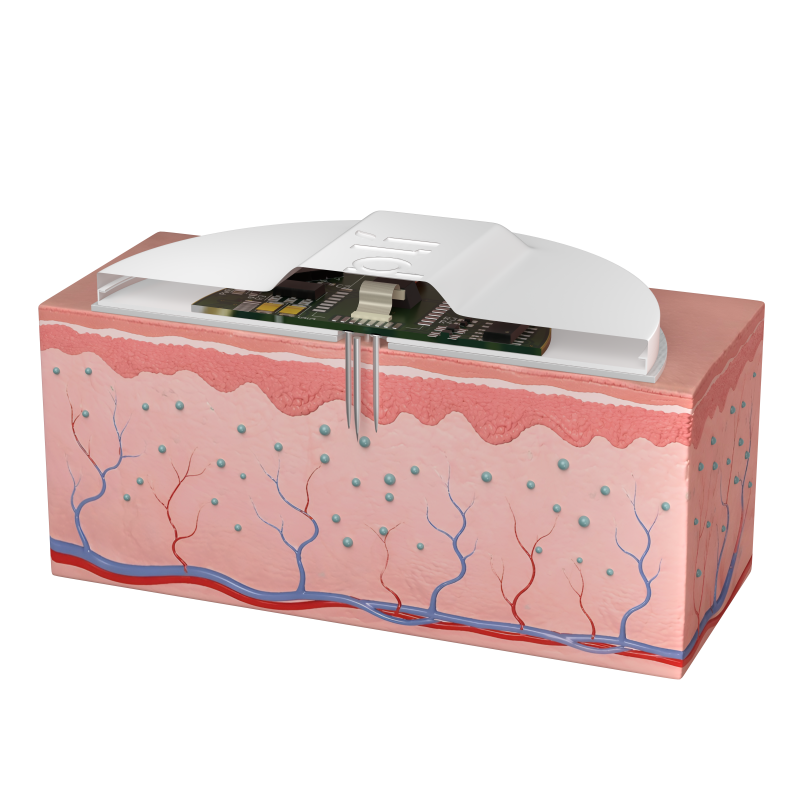
The LMS will lead clinical planning for the project, drawing on its internationally recognised expertise in endocrine and metabolic disease, while working alongside partners including the London Institute for Healthcare Engineering at King’s College London. The programme also highlights the strength of the research ecosystem at Imperial’s Hammersmith Hospital Campus. The project will bring together academic, clinical and industry partners to translate promising research into tools that could ultimately improve patient care. The award follows growing momentum in the field of hormone monitoring. Earlier this year, Impli secured funding for first-in-human studies of the same biosensing platform in fertility treatment, creating parallel development programmes in reproductive and endocrine health. For the LMS, participation in the SPRIND Challenge reflects the institute’s broader commitment to translating fundamental discoveries in hormone biology into technologies and treatments that improve patient care.