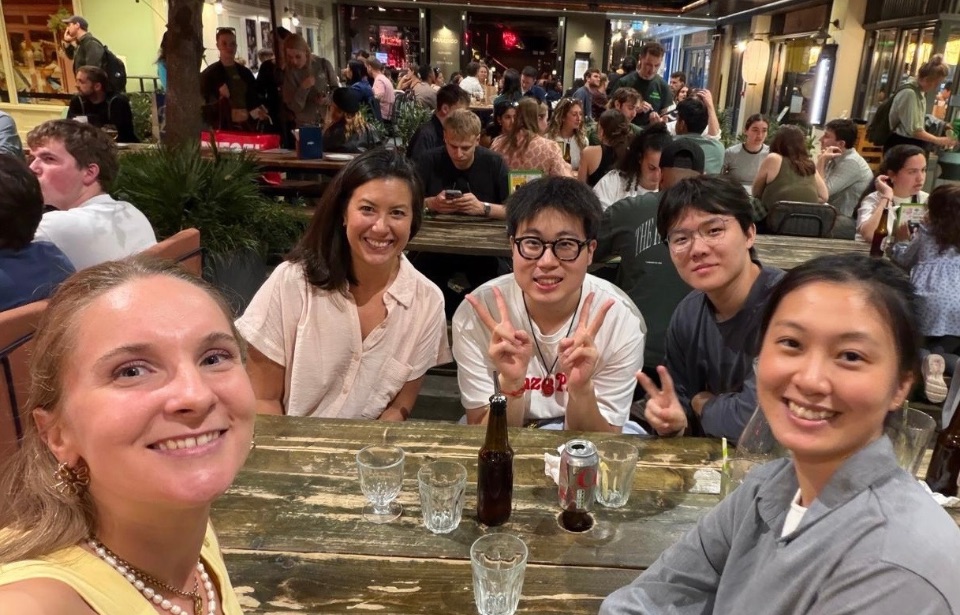
Meet the team
Eveline KahlmanVisiting ResearcherKatrina XianResearch Assistant
If you're interested in joining the LMS


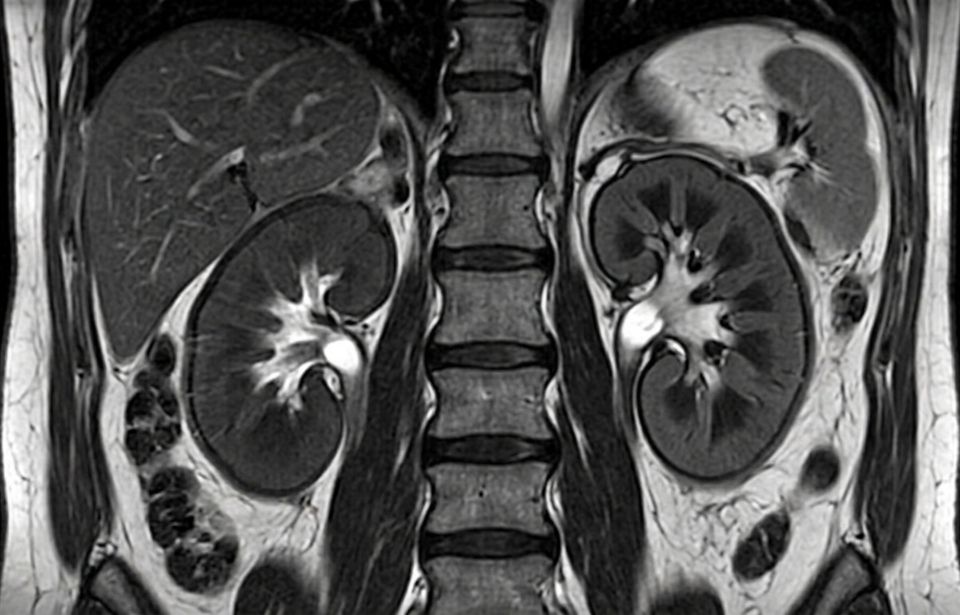
Around 1 in 300 babies are born with a problem affecting how their kidneys or bladder formed in the womb. These conditions are the most common cause of kidney failure in children, yet in most cases we don’t know why they happen. Our research studies how the kidneys and bladder develop and uses patients’ genetic information to work out what might be going wrong, using lab-based models of developing kidneys called organoids to test our ideas. Our goal is to help families get a clear diagnosis sooner, and to lay the groundwork for new treatments in the future.
Congenital anomalies of the kidneys and urinary tract (CAKUT) are a diverse group of structural malformations arising from disruption during embryonic development. While rare coding variants in developmental transcription factors, such as HNF1B, explain a subset of cases, most of these conditions remain genetically unexplained. We aim to characterise the molecular mechanisms underlying normal kidney and urinary tractdevelopment and understand what might be going wrong during these dynamic and cell-type specific programmes to result in structural malformations. To do this we combine clinical and whole genome sequencingdata from patients with multiomic maps of kidney development and functional genomic approaches to identify the gene-regulatory networks critical for kidney and urinary tract development and disease.
Congenital anomalies of the kidney and urinary tract (CAKUT) are the leading cause of kidney failure in children, but most patients currently have no genetic diagnosis, leaving families without answers about cause, recurrence risk, or prognosis. Our research aims to identify novel genomic causes of CAKUT and improve diagnostic yield in clinical genomic testing. Long term, understanding the gene-regulatory mechanisms of kidney and bladder development lays the foundations for future gene- and stem-cell-based therapies, with the aim of reducing the lifelong burden of dialysis and transplantation for patients and their families.






Chan MMY, Sadeghi-Alavijeh O, du Preez S, Voinescu CD, van der Zanden LFM, Groen In ‘t Woud S, Schreuder MF, Feitz W, Mingardo E, Hilger AC, Reutter H, Vendrig LM, Westland R, Beaman GM, Newman WG, Woolf AS, Stanescu HC, Levine AP, Böckenhauer D, Gale DP. Whole-genome sequencing characterizes monogenic and polygenic contributions to structural kidney and urinary tract malformations. Kidney Int. 2026 Sep 21:S0085-2538(26)00790-8. doi: 10.1016/j.kint.2026.07.037. PMID: 42767608.
Sadeghi-Alavijeh O*, Chan MMY*, Tzoumkas K, Doctor GT, Gale DP. Quantifying APOL1, Human Leukocyte Antigen, and Other Genetic Contributions to Unexplained Kidney Failure. Am J Kidney Dis. 2025 Dec;86(6):740-750.e1. doi: 10.1053/j.ajkd.2025.07.005. PMID: 40967557.
Roberts NA, Chan MMY, Woolf AS. The biology of congenital urinary bladder outflow obstruction. Trends Mol Med. 2025 Oct 24;32(5):472-483. doi: 10.1016/j.molmed.2025.09.009. PMID: 41437405.
Chan MMY, Sadeghi-Alavijeh O, Lopes FM, Hilger AC, Stanescu HC, Voinescu CD, Beaman GM, Newman WG, Zaniew M, Weber S, Ho YM, O Connolly J, Wood D, Maj C, Stuckey A, Kousathanas A, Genomics England Research Consortium, Kleta R, Woolf AS, Bockenhauer D, Levine AP, Gale DP. Diverse ancestry whole-genome sequencing association study identifies TBX5 and PTK7 as susceptibility genes for posterior urethral valves. Elife. 2022 Sep 20;11:e74777. doi: 10.7554/eLife.74777. PMID: 36124557.